
Overview
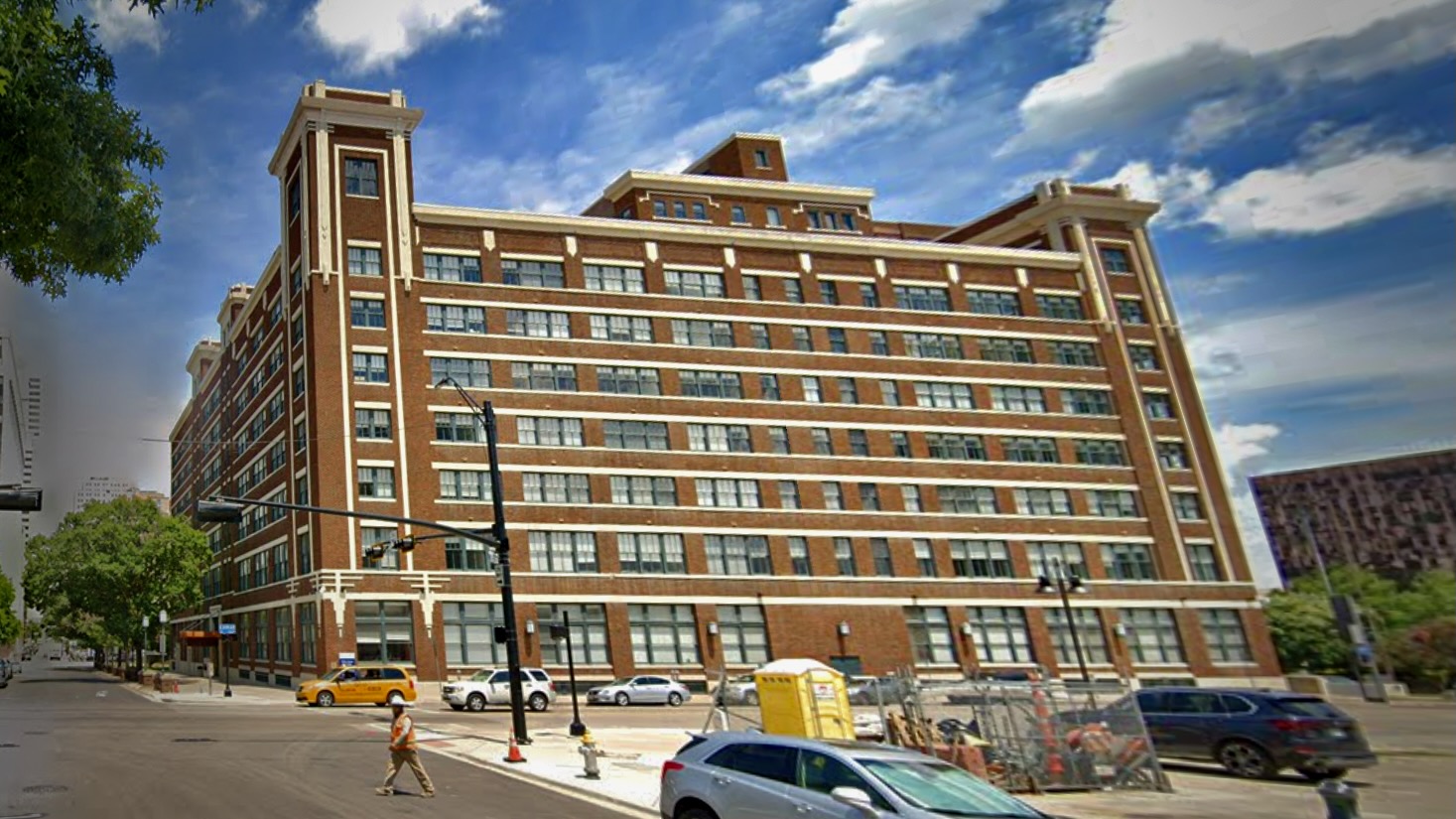
The Higginbotham-Bailey Building, located at 1000 Jackson Street, is one of downtown Dallas’s major surviving early warehouse/commercial landmarks and an important reminder of the city’s rise as a regional wholesale center in the early 20th century.
Built for the wholesale dry-goods firm Higginbotham-Bailey-Logan Co., the structure was designed by the Dallas architectural firm Lang and Witchell. Construction occurred in several phases: the western section was completed in 1914, followed by additions in 1917 and 1923, eventually expanding across the block.
The company distributed dry goods and related merchandise throughout Texas and the Southwest. In 1945 the company name was shortened to Higginbotham-Bailey, but the building continued to reflect Dallas’s importance as a railroad-connected warehouse and garment-distribution center. Dallas city preservation sources note the company’s role in helping establish the city’s Garment District in the West End area.
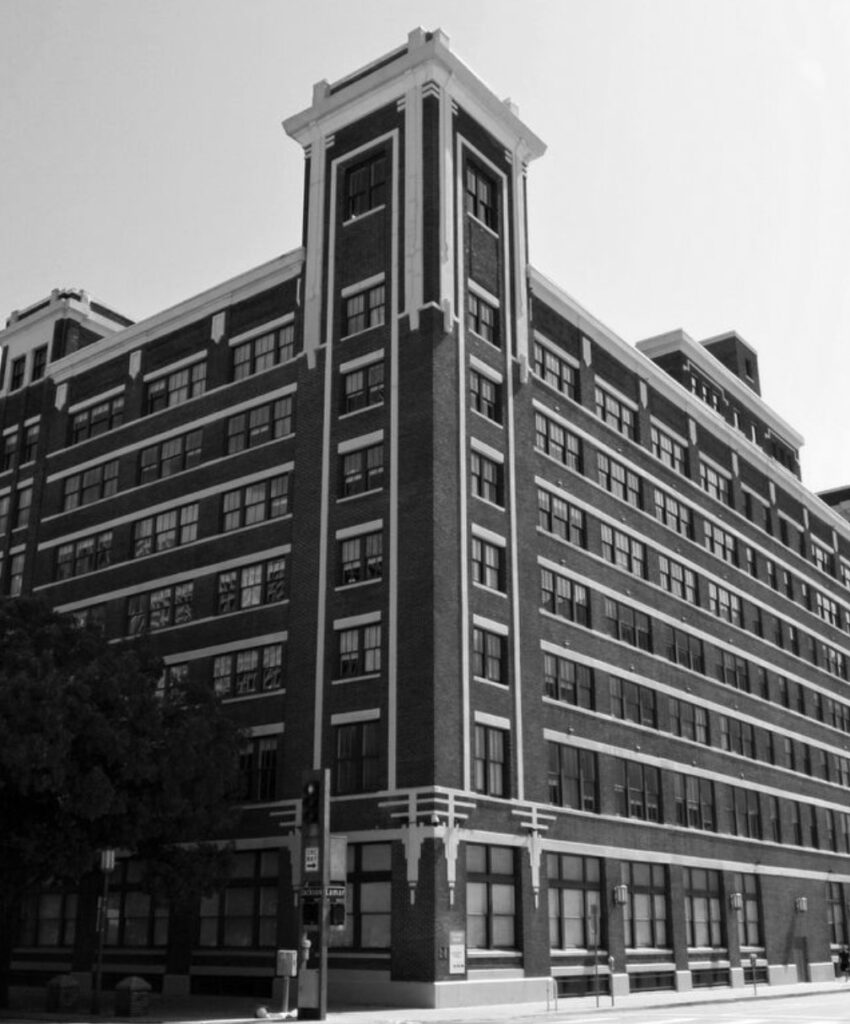
Architecturally, the building is significant for its blend of simplified Renaissance Revival styling with Chicago School warehouse massing. It features brick façades, large industrial window openings, and distinctive geometrically detailed corner towers. Those towers give the long warehouse block a surprisingly elegant skyline presence. By the late 20th century, wholesale warehousing had declined downtown, and the building was adapted for new uses. It received both Dallas Landmark status and Recorded Texas Historic Landmark recognition in 1984, the same era in which it was converted to office use.
Text of City of Dallas Historic Preservation Designation Application
The Higginbotham-Bailey Company was involved in the founding of the Dallas Garment District as one of the first dry goods concerns to be located in what is now the West End District.
The building was owned by the Higginbotham-Bailey Company and was purchased on March 17, 1983, by Woodbine Development Corporation as agent for 900 Jackson Street Building Partners, Ltd.
The Higginbotham—Bailey building was designed by the Dallas firm of Lang and Witchell, one of the leading architectural firms in the southwest. Otto Lang, the driving force of the firm, immigrated to the U.S. in 1888 and worked as the chief designer for the T & P Railroad beginning in 1890. In 1904, Lang met Frank Witchell, who had come to Dallas from San Antonio to work as a designer for Sanquinet and Stats. The two men formed their partnership the next year.
Lang and Witchell built several major structures in the Chicago School or Sullivanesque style including the American Exchange National Bank (now Metropolitan Savings and Loan), the Dallas Athletic Club, the Sears and Roeback complex, the Adoiphus Hotel annex, the Fair Park Auditorium, the Lamar Street Sanger Brothers Department Store (now El Centro College), and the Higginbotham-Bailey—Logan building. By the late l920s, the firm was moving out of the Chicago School into the expanding modern style popularized by the 1925 Paris Exposition des Arts De’coratifs. Lang and Witchell soon proved to be masters of the Art Deco style, as seen in the Lone Star Gas Building and the Dallas Power and Light Building. (https://dallascityhall.com/departments/sustainabledevelopment/historicpreservation/HP%20Documents/Landmark%20Structures/Higginbotham%20Bailey%20Building%20Landmark%20Nomination.pdf)
Get future posts by email.