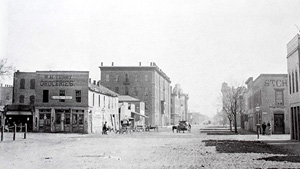

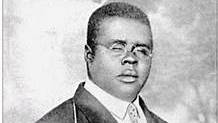
Blind Lemon Jefferson (born in 1893, Freestone County, Texas and died in Chicago, Illinois in 1929) was a frequent performer in Dallas’s Deep Ellum venues. He was unquestionably one of the most influential early blues musicians and the first major male solo blues recording star. He was the eighth of approximately eight or nine children born to Clarissa and Alex Jefferson, African-American sharecroppers near Wortham/Streetman, Texas. Census records consistently point to a 1893 birth year, though his 1917 draft registration listed October 26, 1894, and noted he had been blind since birth.
By his early teens, Jefferson taught himself guitar and began performing at local picnics, parties, and churches. He played gospel music at the General Association of Baptist Churches in Buffalo, Texas, which later led to his first recordings. As a street musician, he performed in East Texas towns and became a fixture in Dallas’ Deep Ellum district by around 1917, where he played on street corners and in front of barbershops. His cousin Alec Jefferson recalled him singing from 8 p.m. until 4 a.m. in rough environments filled with hustlers and bootleggers.
In 1912, Jefferson started traveling regularly to Dallas, where he performed with Lead Belly and mentored a young T-Bone Walker, teaching him blues guitar basics in exchange for guidance as a blind musician. By the early 1920s, his street performances supported him financially.
Jefferson pioneered solo voice-and-guitar blues recordings. In late 1925 or early 1926, he was brought to Chicago to record for Paramount Records. His first two tracks were gospel songs released under the pseudonym Deacon L. J. Bates: “I Want to Be Like Jesus in My Heart” and “All I Want Is That Pure Religion.” His blues sides soon followed. “Booster Blues” and “Dry Southern Blues” were initial hits, but “Got the Blues” and “Long Lonesome Blues” became major successes, selling in six figures.
Between 1926 and 1929, he recorded roughly 100 tracks, with 43 records issued (nearly all on Paramount). His uninhibited style captured everyday Southern life—from street corners and honky-tonks to oil fields. In 1927, he briefly recorded for Okeh Records, cutting the hit “Matchbox Blues” backed with “Black Snake Moan,” before returning to Paramount. Other notable recordings include “See That My Grave Is Kept Clean” (also released under his gospel pseudonym).
Jefferson’s confident guitar work, expressive vocal range, and refusal to follow conventions helped popularize male solo blues. His success allowed him to travel widely, buy a car, and employ chauffeurs—uncommon for African-American musicians of the era. He influenced a new generation of blues artists, including Furry Lewis, Charley Patton, and Barbecue Bob. His “old-fashioned” yet innovative sound made him a cornerstone of the Texas blues tradition and early commercial blues recording.
Literally dozens of artists have “covered” (recorded) his compositions. One example is “Matchbox Blues” which he recorded in 1927. This one song has been recorded by well known artists such as Bob Dylan, Johnny Cash, Willie Nelson, Eric Clapton, Carl Perkins, Johnny Rivers, Duane Eddy, Paul McCartney, Jerry Lee Lewis, Albert King and the Beatles. One blues song, “Black Snake Moan,” is the title of a feature film. His musical legacy will no doubt continue.
Get future posts by email.