
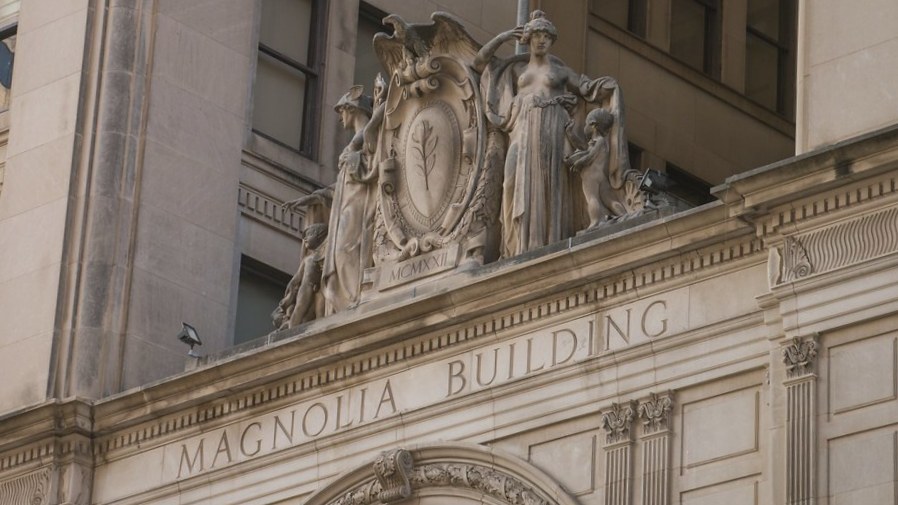
Construction began on this building in 1921 and was completed in August of 1922. The primary architect was Sir Alfred Charles Bossom (a/k/a Alfred C. Bossom), a British architect. The style is referred to as Beaux-Arts classicism. Bossom is credited with the overall design and the local firm of Lang & Witchell, collaborated on the project was engaged to oversee the construction. The building’s historic landmark application includes these comments.
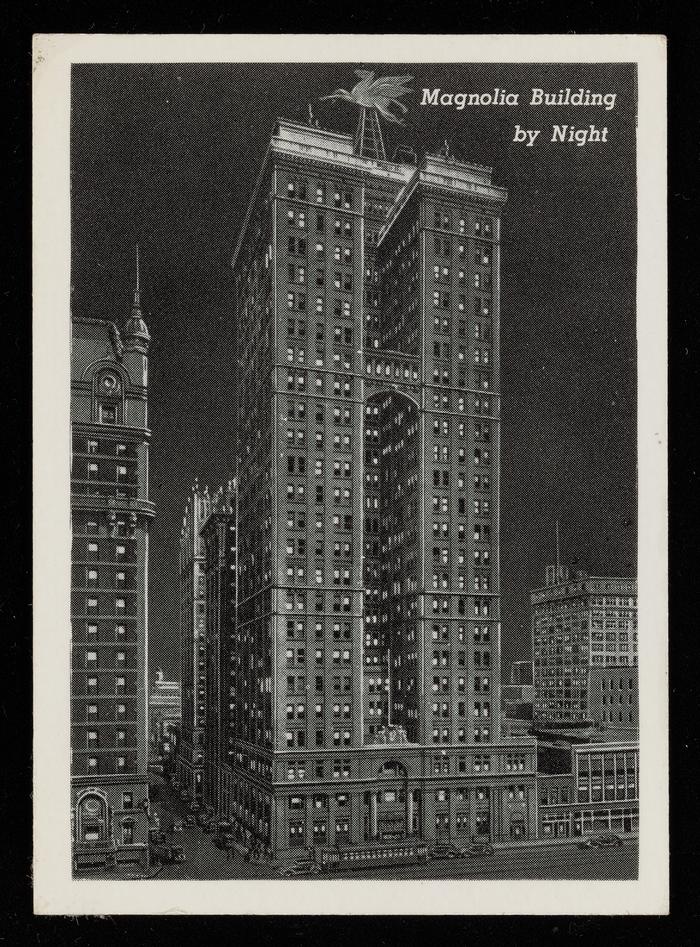
It is 29 stories in height, plus two basements. The building’s frontage is 100 feet on Akard Street and 160 feet on Commerce Street. The exterior facing is tan-colored Indiana limestone and has a heavy, dentulated cornice.
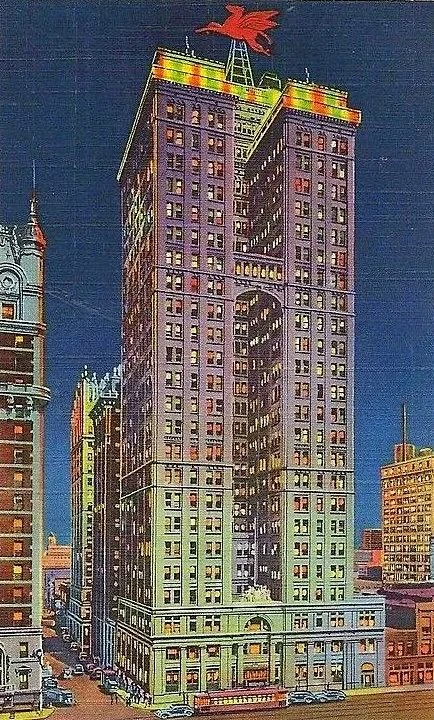
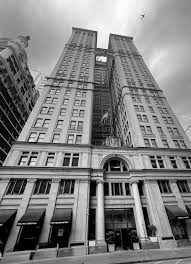
The building’s symmetrical massing has a two part scheme with a recessed central light well on the front (south) facade, Twin pavilions rising from the third story are joined by a flying segmental arch at the 17th story. The main body of the U—shape plan rises 24 stories from the street level. Additional attic stories and cupola tower add 5 stories, but are set back from the mainmass of the building. The first three stories are solidly massed, the first two broken only by the fenestration of windows and doors of an inappropriately scaled 1950’s facade alteration. The west, north, and east facades are unbroken in massing with the exception of a projecting pavilion (approximately 25’ x 25’) on the north portion of the east facade. These elevations of the building and attached pavilion also rise the full 24 stories with the upper attic stories recessed above.
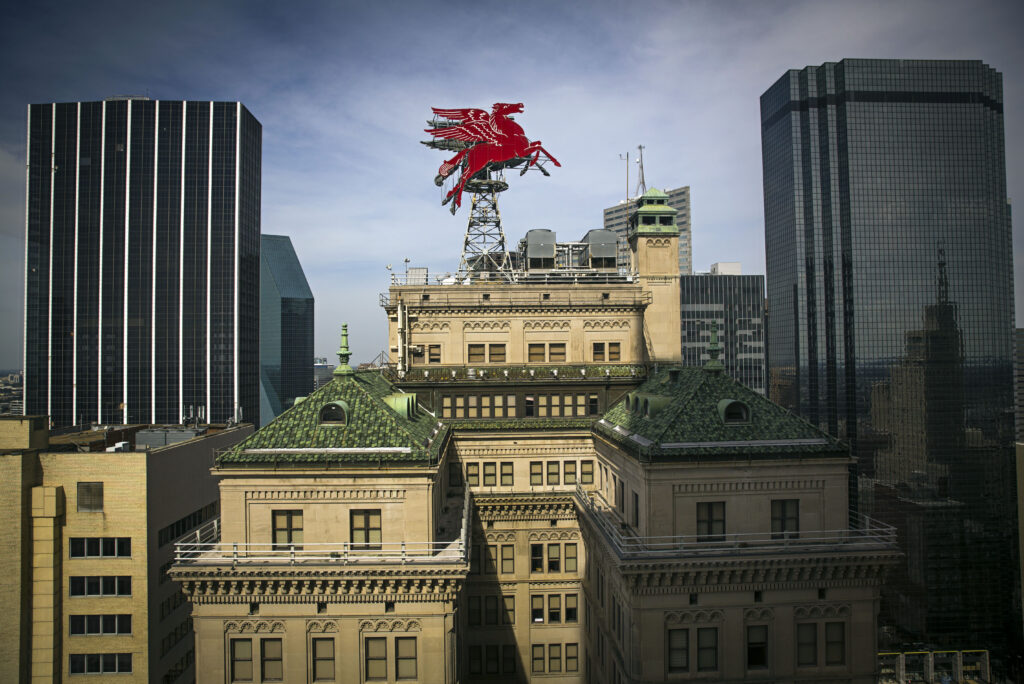
Terminating each of the two front pavilions is a set back attic story with a hipped tile roof. A large finial rests at the apex of the front hip. A single round arch dormer projects from each of the front hips of the roofs and three like dormers are on the side slopes of the roofs. Symmetrically spaced single windows penetrate the walls of this first attic story. The hipped roofed attic story intersects a. four story massing behind it (to the north) which is-the uppermost portion of the main body of the building. A parapet wall with a set back mansard roof tops this portion of the massing. On the east side of the topmost stories a tower is attached and rises another full story above the rest of the structure. It is topped with a pyramidal roofed cupola that breaks and rises to a double tiered cupola, reaching the maximum height of the structure. The first level of the attic story at the rear (north) elevation is flanked by a broken pediment which intersects the recessed portion of the three higher attic stories. The 4/4 sash windows on the 27th story are detailed with classical pediments. Small 1/1 sash windows are on the 28th level.
To see the complete application, please see: https://dallascityhall.com/departments/sustainabledevelopment/historicpreservation/HP%20Documents/Landmark%20Structures/Magnolia%20Building%20National%20Register%20Form.pdf
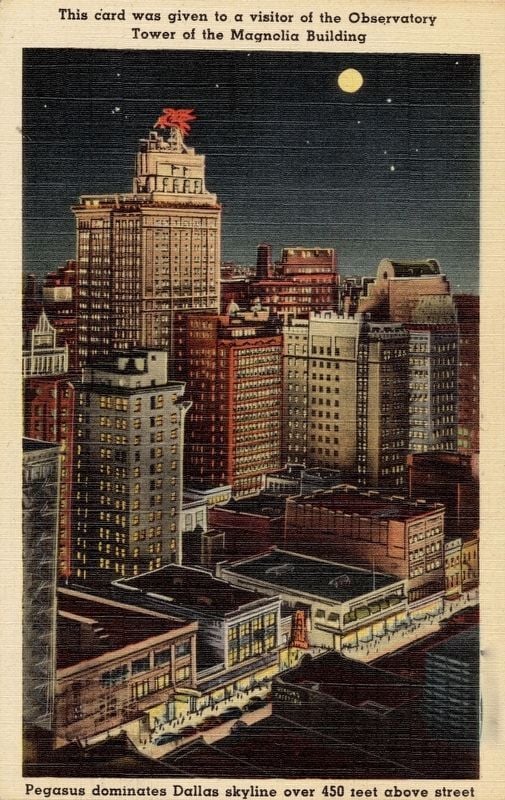
The original owner was Magnolia Petroleum Company, and through a series of mergers and name changes, the company is now known as Exxon-Mobil. The building has changed owners several times and is currently operating as the Magnolia Hotel. A sign depicting the flying red horse, Pegasus, adorned the top of the building. Pegasus was a logo of Magnolia Petroleum. A local company known as Texlite was engaged to build a porcelain sign outlined in red neon. It was completed and installed in 1934 in time for a national oil and gas convention held in the city. For some time, the sign rotated and was a familiar landmark to residents and travelers. Currently there is a sign on the building that is a replacement since the original sign had deteriorated due to the elements.
City of Dallas – Historic Landmark Nomination Form – https://dallascityhall.com/departments/sustainabledevelopment/historicpreservation/HP%20Documents/Landmark%20Structures/Magnolia%20Building%20Landmark%20Nomination.pdf
Get future posts by email.