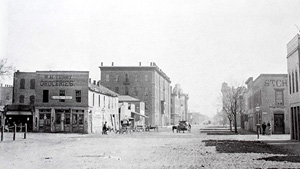

The decade of the 1920s may have been the high water mark for Deep Ellum movie and live entertainment venues. Some of the theaters are listed below. Tickets were usually priced at less than $0.50.
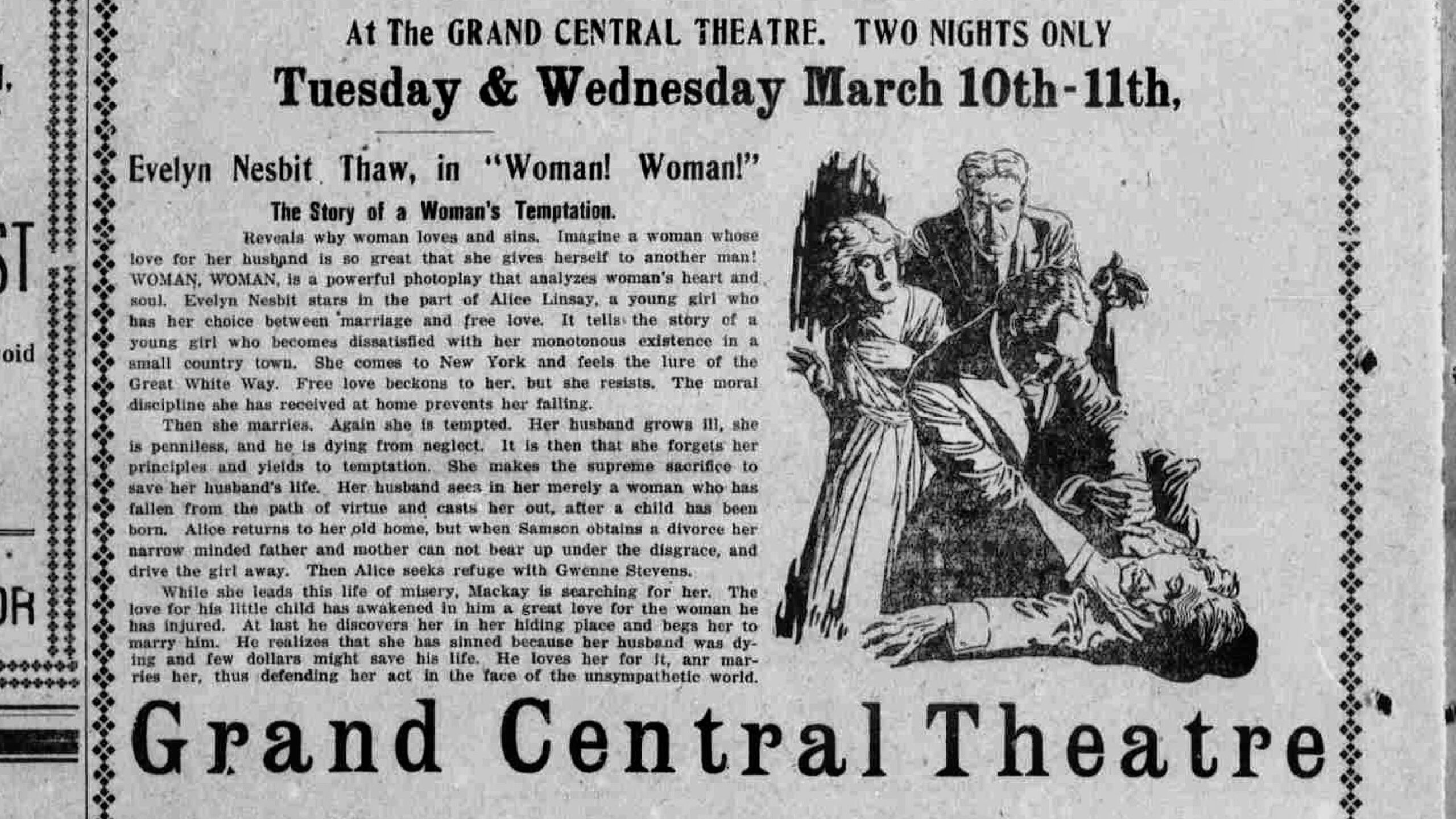
Grand Central Theatre – Opened in 1908 by John “Fat Jack” Harris. Grand Central was an African American owned movie house on Central Avenue (later part of North Central Expressway) near Swiss Avenue. It showed films and hosted live acts. The theater screened films of all kinds, including around 1910 when Harris screened a film featuring African American heavyweight boxing champion Jack Johnson defeating challenger Stanley Ketchel. The Grand Central became an important cultural spot for vaudeville, films, and live performances in the community. An advertisement in the Dallas Express on Saturday December 11, 1920 promoted Captain Bill Tilghman making a personal appearance for a screening of the film “Passing of the Oklahoma Out-Laws” and Roy Stewart appearing in a western called “Devil to Pay.” Other newspaper articles note the theater as being the location for religious meetings for local congregations.
Mammoth Theatre – Owned by Joe Trammell, another African American-run cinema in Deep Ellum showing films to local audiences.
High School Theater – 3211 Cochran Street. An advertisement in the Dallas Express on Saturday January 11, 1919 shows the proprietor to be Herman Batts and the coming week’s movies to be “Les Miserables,” “Wolves of Culture,” Frank Keenan in “Ruler of the Road,” Bessie Love in “Brass Bullet, “The Iron Test,” “The Hand of Vengeance” and a comedy called “Who’s Guilty.” Hosted “The Great Houdini” in 1919.
Park Theater – 400 block of Central, at one point managed by former vaudevillians Chintz Moore and Ella B. Moore. An advertisement in the June 12, 1920 issue of the Dallas Express described the Park Theater as “High class Vaudeville and Moving Pictures, … nicest place in town.” Later the entity was known as Ella B. Moore Theater at a newer location. Near the end of 1925, Chintz and Ella Moore along with W. D. James were the incorporators of Ella B. Moore Amusement Company, an opera house, with capital stock of $50,000. Mr. Moore ran an advertisement noting that he was Southwestern Representative and Treasurer of the Colored Vaudeville Circuit, also known as or at least related to the Colored Consolidated Vaudeville Exchange.
Palace Theatre – A neighborhood movie theater initially operated by Felix Moore; it continued into the 1920s and later became known as the Harlem Theatre in the 1930s. An advertisement in the April 17, 1920 issue of the Dallas Express called it “South’s Finest Colored Theater.” The film lineup for the coming week was Douglas Fairbanks in the western “Arizona,” Tom Mix in “The Speed Maniac,” Alice Brady in “His Bridal Night,” a film from an Italian serial about a character Zingo: “Zingo and the White Elephant,” “The Accusing Post,” a western called “The Hello Girl of Angel Camp,” Tom Moore in “The Gay Lover” with the subtitle “He loved so many, he couldn’t keep them straight himself.” Mutt and Jeff in “On Strike.” The advertisement noted that the theater offered matinees every day but Sundays and holidays.
Other theaters mentioned from time to time include Black Elephant, White Elephant, The Circle, Swiss Airdome Theater and Star Theater.
Sources include various newspaper articles and Alan B. Govenar and Jay E. Brakefield, “Deep Ellum and Central Track – Where the Black and White Worlds of Dallas Converged,” University of North Texas Press, 1968.
Get future posts by email.